
Prudential Life Insurance Company Denials Attorney
Denial Claims Attorneys Against Prudential Life Insurance Company
Prudential denied or delayed your life insurance or disability claim. You still have a right to pursue the benefits your policy promises. Pillsbury & Coleman, LLP represents California policyholders against Prudential in ERISA appeals, bad faith litigation, and federal court.
Our attorneys have represented California policyholders exclusively against insurance carriers since the firm’s founding in 1991. That focus has produced over $1 billion in recoveries for clients, along with the largest disability insurance bad faith verdict in California history. Pillsbury & Coleman, LLP has been representing clients throughout California for decades, fighting insurance companies that have unjustly denied benefits to policyholders. We actively seek effective resolutions to what has been done to our clients and work to obtain the full amount of benefits that our clients deserve.
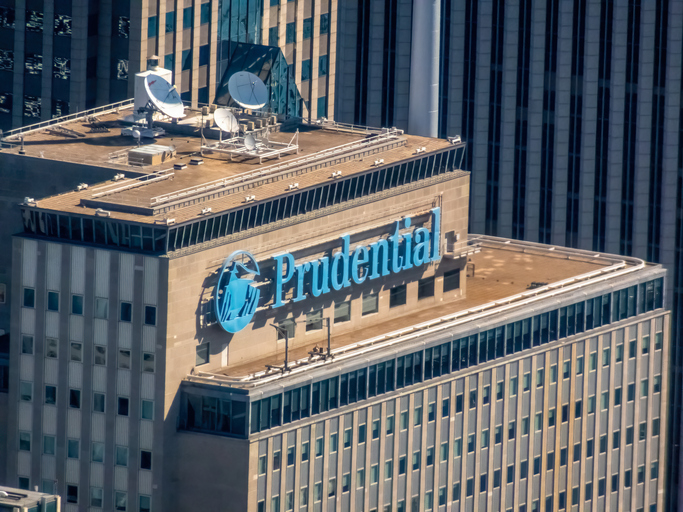
Prudential is one of the largest insurance providers for life and disability insurance, serving clients across the globe. Among many services, the business offers various types of life and disability insurance, including term life insurance, universal life insurance, variable universal life insurance, group disability insurance and more. Prudential has faced regulatory scrutiny and litigation over delayed and denied life and disability claims.
Our San Francisco attorneys have represented California policyholders against Prudential for decades, in both individual bad faith claims and ERISA-governed group disputes. They can help you present your case in court and understand your long-term disability denial letter.
Why a Prudential Claim Denial Requires Specialized Counsel
Whether ERISA or California law governs your Prudential dispute turns on how the policy was issued. An employer-sponsored group plan falls under ERISA, which caps remedies at recovery of benefits and attorney fees and generally rules out punitive damages. Whether a federal court reviews that denial de novo or under the more forgiving arbitrary and capricious standard turns on whether the plan grants Prudential discretionary authority. A policy Prudential issued directly to you as an individual instead remains subject to California bad faith law, including the implied covenant of good faith and fair dealing.
Prudential has relied on extended private investigator surveillance and independent medical examinations to challenge disability claims our firm has litigated directly. In one matter described below, Prudential surveilled a claimant for 19 days before terminating his benefits. Effective counsel must scrutinize the administrative record Prudential compiles during an ERISA appeal, since courts generally limit their review to that record alone.
Why Does Prudential Deny Life Insurance Claims?
Prudential asserts specific grounds when it denies a claim. If those grounds lack support in the policy terms, the factual record, or governing law, you have the right to challenge the denial. Pillsbury & Coleman contests baseless claim rejections in administrative appeals and in court.
Our team will assist you in disputing grounds for denial and fighting against reasons for claim rejections by Prudential and other insurers such as:
- Policy cancellation due to unpaid premiums
- Revocation based on inaccuracies or omissions in the initial application
- Death causes not covered by the policy
- Insufficient evidence supporting the claim
Do You Have a Bad Faith Claim Against Prudential?
California law requires Prudential to fulfill the obligations stated in your policy and the implied covenant of good faith and fair dealing.
Examples of conduct that can constitute insurance bad faith include:
- Misrepresenting facts or policy terms
- Failing to respond promptly to a claimant
- Unreasonably delaying investigation of a claim
- Denying a claim without a reasonable basis
- Declining a reasonable settlement offer, forcing the claimant to sue
- Failing to settle a claim once liability is reasonably clear
- Failing to provide timely written reasons for a claim denial
- Misrepresenting a legal deadline governing the claim, such as a suit limitations period
- Discouraging a claimant from retaining legal counsel
Cal. Ins. Code § 790.03 identifies each of these practices as unfair claims handling. Insurers sometimes use delay strategically, calculating that a claimant under financial pressure will accept a reduced settlement rather than continue to wait.
Through insurance bad faith litigation, you can recover the benefits owed, including interest, and potentially additional compensation for:
- Emotional distress
- Financial harm caused by delayed benefit payments
- Attorney fees
- Punitive damages in cases involving fraud, oppression, or malice
Firm Authority & Track Record
- One of California’s only firms to represent policyholders exclusively against insurance carriers, since 1991.
- Over $1 billion recovered on behalf of California policyholders.
- The largest disability insurance bad faith verdict in California history: $31.7 million against UnumProvident in Chapman v. UnumProvident.
- Terrence J. Coleman, partner, is recognized as an ERISA expert by the Northern District of California.
- AV Preeminent rating from Martindale-Hubbell.
- Membership in the American College of Coverage Counsel (ACCC).
- Recognition in Best Lawyers in America and Super Lawyers.
- Trial experience against Prudential and every other major national life and disability carrier.
Case Result
Dollar Amount & Result Type: Disability Insurance Bad Faith Settlement Following Litigation
Defendant: Prudential Insurance Company of America, a national life and disability insurer
Bad Faith / Wrongful Denial Conduct Proven: Prudential terminated the benefits of an advertising executive disabled by traumatic brain injury after its own independent neuropsychological evaluation confirmed permanent brain damage precluding full-time work. Prudential then surveilled the claimant for 19 days and concluded he had stopped working by choice
Recovery: Pillsbury & Coleman filed suit, and the matter was successfully settled
Source: Pillsbury & Coleman Successes — Disability Insurance Results, Brain Injuries.
What Constitutes Prudential Bad Faith or Wrongful Denial
- Terminating benefits despite the insurer’s own independent medical evaluation supporting the claimant’s disability
- Conducting prolonged surveillance and drawing conclusions from routine activities like driving or brief errands
- Invoking the deferential arbitrary and capricious standard on a plan that never granted Prudential discretionary authority to interpret its terms
- Rescinding a life insurance policy for an application inaccuracy that was immaterial or known to Prudential at issuance
- Converting a claim to the “any occupation” standard before the policy’s own-occupation window has run
- Delaying payment of a California-governed claim beyond 40 days without a written explanation, in violation of Cal. Ins. Code § 790.03(h)
Frequently Asked Questions
How long do I have to sue Prudential for a wrongful denial in California?
Two different deadlines can govern a Prudential claim. A California-governed individual policy generally carries a four-year limitations period under Cal. Code Civ. Proc. § 337, subject to any shorter suit limitations clause in the policy. An ERISA-governed group claim instead follows a deadline set by the plan documents or an analogous state period borrowed by the reviewing court. Identify which framework applies to your policy before assuming either deadline controls.
What does it mean when Prudential acts in bad faith under California law?
Every California insurer, including Prudential, owes its policyholders the implied covenant of good faith and fair dealing. Cal. Ins. Code § 790.03 translates that covenant into specific prohibited practices, such as unreasonably withholding benefits or misrepresenting the reasons for a denial. Once bad faith is established, a policyholder can recover damages beyond the policy limits, including attorney fees under Brandt v. Superior Court.
Can I recover punitive damages against Prudential for denying my claim?
Recovering punitive damages requires clear and convincing evidence of malice, oppression, or fraud in how Prudential handled your claim, a demanding but achievable standard in individual policy disputes. This remedy is unavailable in ERISA-governed group claims, which limit recovery to benefits and fees. Pillsbury & Coleman has litigated punitive damages exposure in cases involving prolonged surveillance and disregarded medical evidence.
Is my Prudential disability claim governed by ERISA or California law?
Prudential writes both employer-sponsored disability plans and individually underwritten policies, and each follows a different legal track. Employer-sponsored plans fall under ERISA, which caps your remedies at recovering benefits and attorney fees and forecloses punitive damages. A policy you purchased directly from Prudential is instead governed by California bad faith law, which allows for broader damages, including punitive damages in egregious cases. Our firm reviews the policy and plan documents in every case to confirm which framework controls.
Prudential hired investigators to surveil me — is that legal?
Surveillance of a claimant is a common Prudential tactic, and courts generally permit it. The legal problem arises when Prudential draws unsupported conclusions from limited footage, such as treating a claimant’s ability to drive or run a brief errand as proof of full work capacity. Our firm has challenged Prudential denials that relied on exactly this kind of surveillance overreach.
How long does it take to resolve a Prudential claim denial in California?
Resolution timelines vary depending on whether your claim proceeds through an ERISA administrative appeal first or moves directly to litigation under state law. An ERISA appeal alone can take several months before a lawsuit becomes available. Once litigation begins, matters with strong bad faith or punitive damages exposure often settle before reaching trial.
How does Pillsbury & Coleman charge for Prudential bad faith cases?
You will not owe Pillsbury & Coleman an attorney fee unless we recover benefits or a settlement on your behalf. This contingency arrangement applies to both ERISA appeals and California bad faith litigation against Prudential. In state law bad faith cases, attorney fees may also be recoverable directly against Prudential under Brandt v. Superior Court.
What documentation should I preserve after Prudential denies my claim?
Hold onto the denial letter, your policy or certificate of coverage, and every medical record you submitted in support of the claim. If Prudential conducted an independent medical examination or surveillance, request and preserve those reports as soon as they become available. These materials typically make up the administrative record a court will review on appeal.
Prudential says I can do “some work” — can it terminate my disability benefits?
Whether Prudential can terminate your benefits depends on your policy’s disability definition, not on whether you can technically perform some form of work. An own-occupation provision limits Prudential to asking whether you can still perform the material duties of your specific occupation. Our firm has challenged Prudential decisions that shifted to the any-occupation standard before the policy’s own-occupation period had actually run its course.
Has Prudential been sued before for wrongful denial of disability claims in California?
Yes. Pillsbury & Coleman represented an advertising executive whose Prudential disability benefits were terminated despite Prudential’s own neuropsychological evaluation confirming permanent brain damage. Prudential instead relied on 19 days of surveillance to argue he had chosen to stop working. That matter, along with Prudential’s documented media scrutiny over delayed claims, illustrates a recurring pattern our attorneys evaluate in every Prudential case.
Policyholders in San Francisco, Los Angeles, San Diego, and throughout California can contact Pillsbury & Coleman for a formal case evaluation. Our attorneys assess insurance coverage and bad faith claims at no charge. There is no attorney fee unless we recover compensation on your behalf. To speak with a California insurance bad faith attorney, call (415) 433-8000 or submit a confidential inquiry through our website.