
New York Life Insurance Company Claim Denials Attorney
Dedicated New York Life Insurance Company Denial Lawyers
New York Life denied or delayed your life insurance, long-term disability, or long-term care claim. You still have the right to pursue what the policy actually promised you. Pillsbury & Coleman, LLP represents California policyholders against New York Life in ERISA appeals and bad faith litigation.
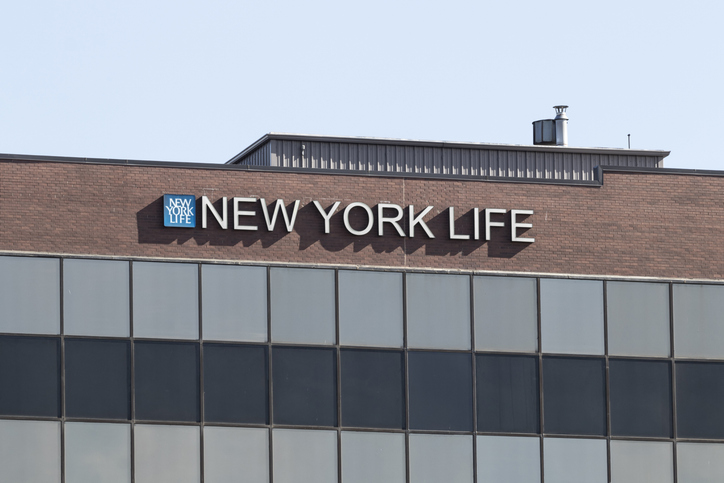
Our practice has represented California policyholders exclusively against insurance carriers since 1991, never on the insurer’s side. That focus has produced over $1 billion in client recoveries, including the largest disability insurance bad faith verdict in California history.
Since 1845, New York Life Insurance Company has been providing insurance policies to individuals and families. The company offers a wide range of insurance and investment products, ranging from life insurance and long-term care insurance to investment annuities.
Why a New York Life Claim Denial Requires Specialized Counsel
Most New York Life group long-term disability policies are issued through an employer, union, or affinity group, which places the claim under ERISA. ERISA preemption limits available remedies to recovery of benefits and attorney fees, and generally forecloses punitive damages. A federal court reviewing that denial applies either de novo review or the more deferential arbitrary and capricious standard, turning on whether the plan grants New York Life discretionary authority to interpret its own terms. A New York Life policy you bought on your own, by contrast, sits outside ERISA entirely and is governed by California bad faith law, with its own protections under the implied covenant of good faith and fair dealing.
A denial letter rarely discloses the full administrative record New York Life relied on to terminate a claim. Effective counsel must obtain that record, including any independent medical examination reports and internal claims notes, before an appeal deadline runs. Missing an ERISA appeal deadline can permanently forfeit the right to challenge a wrongful denial in federal court.
About New York Life Group Long-Term Disability Coverage
Despite its name suggesting a focus on New York, New York Life offers group long-term disability insurance policies across the United States to various organizations, including employers, unions, and affinity groups. These policies provide coverage for members who become disabled due to injury or illness, acting as a financial safety net for those who are unable to work and earn an income due to a health condition or injury.
Group policies place these benefits at risk when New York Life applies ERISA preemption or an unfavorable claims-handling standard. Policyholders rely on New York Life to honor its contractual obligation to pay benefits when a covered disability arises.
Firm Authority & Track Record
Pillsbury & Coleman has represented California policyholders exclusively against insurance carriers since 1991. The firm has recovered over $1 billion for clients and holds the record for the largest disability insurance bad faith verdict in California history, a $31.7 million jury verdict against UnumProvident in Chapman v. UnumProvident.
- Partner Terrence J. Coleman is recognized as an ERISA expert by the Northern District of California.
- Firm attorneys carry an AV Preeminent rating from Martindale-Hubbell.
- The firm holds membership in the American College of Coverage Counsel (ACCC).
- Recognitions include Best Lawyers in America and Super Lawyers.
- Attorneys represent policyholders statewide and in federal courts nationally.
Case Result
Dollar Amount & Result Type: Confidential Disability Insurance Bad Faith Settlement
Defendant: New York Life Insurance Company
Bad Faith / Wrongful Denial Conduct Proven: The insurer performed a biased investigation and denied a disability insurance claim to a large animal veterinarian who could no longer examine cattle due to a severe shoulder injury requiring surgery. However, our client returned to work as a professor, and New York Life used his return to work as a basis to terminate benefits, even though he had purchased “own occupation” coverage that protected him in the event he could no longer work in his own prior occupation.
Recovery: Pillsbury & Coleman litigated the case in state court and achieved a confidential settlement for our client shortly before trial.
Source: Spiro v. New York Life, San Francisco County Superior Court, Case No. CGC-09-495281.
What Constitutes New York Life Bad Faith or Wrongful Denial
- Denying a disability insurance claim based on an inadequate investigation or misapplication of the policy language
- Applying the ERISA arbitrary and capricious standard to a group LTD plan that does not grant New York Life discretionary authority
- Relying on a paper review of medical records rather than an examination of the claimant
- Shifting to the “any occupation” standard while the policy’s own-occupation period is still running
- Delaying payment of a California-governed claim beyond 40 days without a written explanation, in violation of Cal. Ins. Code § 790.03(h)
- Terminating long-term care benefits on legacy policies without adequately documenting a change in the insured’s condition
- Issuing a reservation of rights letter without disclosing the specific policy basis for denial
Frequently Asked Questions
How long do I have to sue New York Life for a wrongful denial in California?
New York Life policies typically include a contractual suit limitations clause, which often runs shorter than the four-year period California allows for breach of a written contract under Cal. Code Civ. Proc. § 337. When ERISA governs your group disability claim, this state deadline does not apply directly; federal courts instead borrow an analogous limitations period or enforce whatever deadline the plan documents specify. Because these deadlines vary by policy and plan language, confirm yours immediately after receiving a denial.
What does it mean when New York Life acts in bad faith under California law?
Cal. Ins. Code § 790.03 lists specific unfair claims practices California prohibits, including conducting a biased investigation and misrepresenting policy terms to a claimant. When New York Life engages in these practices, it breaches the implied covenant of good faith and fair dealing owed to every California policyholder. That breach opens the door to damages beyond the policy limits, including attorney fees recoverable under Brandt v. Superior Court.
Can I recover punitive damages against New York Life for denying my claim?
Punitive damages become available under California law when clear and convincing evidence shows New York Life denied your claim with malice, oppression, or fraud. ERISA-governed group plans foreclose this remedy, so it applies only to individually purchased New York Life policies subject to state law. Pillsbury & Coleman has pursued punitive damages exposure in bad faith litigation against major life insurers.
Is my New York Life group disability claim governed by ERISA or California law?
New York Life administers both ERISA-governed group plans and individually underwritten policies, and the distinction controls your available remedies. A plan sponsored by your employer, union, or affinity group triggers ERISA preemption, which caps recovery at benefits and attorney fees. An individually underwritten New York Life policy instead falls under California bad faith law, opening the door to broader damages. Reviewing your plan or policy documents is the first step toward determining which set of rules governs your claim.
New York Life denied my life insurance claim based on a misrepresentation on the application — what are my rights?
An insurer cannot rescind or deny a life insurance policy for a misrepresentation it knew about, or one made by a broker rather than the insured. California law requires the misrepresentation to be material and made by the applicant to justify rescission. Our firm has successfully challenged denials based on broker errors the insurer was aware of at the time of application.
How long does it take to resolve a New York Life claim denial in California?
Before litigation becomes available, a New York Life ERISA claim must first complete the plan’s internal administrative appeal, a process that often takes several months on its own. Once filed, litigation typically resolves in twelve to twenty-four months, depending on how contested the administrative record is. Matters with strong bad faith exposure tend to settle well before trial.
How does Pillsbury & Coleman charge for New York Life bad faith cases?
We handle New York Life claim denials on a contingency fee basis, meaning you owe no attorney fee unless we recover benefits or a settlement on your behalf. California bad faith law can also shift attorney fees directly onto New York Life under Brandt v. Superior Court. That fee-shifting remedy is unavailable in ERISA-only cases, where recoverable fees follow a separate statutory standard.
What documentation should I preserve after New York Life denies my claim?
Keep every piece of correspondence exchanged with New York Life, starting with the denial letter itself and your policy or certificate of coverage. Save the medical records and application materials you or your broker submitted, along with any internal claim notes New York Life discloses during appeal. Together, these documents make up the administrative record a court will later review.
New York Life says I can do “some work” — can it terminate my disability benefits?
An own-occupation provision in your New York Life policy protects you from termination simply because you could theoretically perform some different job. New York Life must instead show you can no longer perform the material duties of your own occupation. Watch for an early shift to the any-occupation standard, since some policies convert after a defined own-occupation period, and premature application of that later standard is a common point of dispute.
Has New York Life been sued before for wrongful denial of insurance claims in California?
Pillsbury & Coleman has litigated life insurance and disability bad faith claims against major national carriers, including matters involving New York Life policies, such as Spiro v. New York Life (San Francisco County Superior Court, Case No. CGC-09-495281) and Regelson-Blanck v. New York Life Insurance Company (Santa Cruz County Superior Court, Case No. CV149729). Our attorneys review each carrier’s publicly documented claims-handling patterns as part of every case evaluation. Contact our firm to discuss whether similar conduct affected your claim.
Policyholders in San Francisco, Los Angeles, San Diego, and throughout California can contact Pillsbury & Coleman for a formal case evaluation. Our attorneys assess insurance coverage and bad faith claims at no charge. There is no attorney fee unless we recover compensation on your behalf. To speak with a California insurance bad faith attorney, call (415) 433-8000 or submit a confidential inquiry through our website.