Notable Results
We have won cases against every major insurance carrier. In fact, we secured the largest disability insurance bad faith verdict ever in California. Learn More
Full Resources
Insurance companies use many tactics to deny, delay, or devalue claims. We have the skilled staff and financial resources to go up against the biggest insurance carriers. Learn More
Our Compassion
We regularly hear from clients that our advocacy changed their lives. You can count on the caring team at Pillsbury & Coleman to exhaust every avenue to obtain the justice you deserve. Learn More
Proven Trial Attorneys
When insurance companies play hardball, our experienced litigators are up to the challenge. Our lawyers have prevailed against all the big players, including Unum, MetLife, Prudential, Cigna, Hartford and Mass Mutual. Learn More
Disability Claims
Denial Attorneys
Policyholders Nationwide Whose Disability Benefits Were Denied or Terminated Have Legal Recourse
When a Disability Insurer Denies Benefits You Earned and Paid For
A long-term disability policy is a contract. The policyholder pays premiums — often for years or decades — in exchange for a defined benefit if a disabling condition prevents them from working. When a carrier denies that claim, terminates benefits after a brief approval period, or substitutes a biased paper review for objective evaluation of the medical evidence, that conduct may constitute a wrongful denial of benefits and a breach of the implied covenant of good faith and fair dealing.
Disability Claims Denial Attorneys at Pillsbury & Coleman, LLP have represented policyholders against every major disability insurer since 1991. Our San Francisco-based firm has recovered over $1 billion for California and national policyholders whose claims were denied by carriers including UnumProvident, MetLife, Prudential, CIGNA/LINA, The Standard, Sun Life, Liberty Mutual, Hartford, and Mass Mutual. We handle both state law bad faith claims and ERISA disability appeals in federal courts throughout the country, including the N.D. Cal., C.D. Cal., and the Ninth Circuit.
If your long-term disability, short-term disability, or ERISA claim has been denied, delayed, or terminated, Pillsbury & Coleman can evaluate whether that denial was wrongful and what remedies your policy and the law permit.
Career-ending injuries and progressive conditions force policyholders to rely on the disability coverage they purchased. Insurance carriers — motivated by financial incentive to reduce claim costs — frequently deny, delay, or terminate legitimate disability claims. Policyholders who lack legal representation face those decisions alone, without knowledge of their appeal rights, the applicable standard of review, or the evidentiary record that will govern any subsequent litigation.
Why Disability Denial Litigation Requires Exclusive Specialization
Disability insurance litigation is among the most technically demanding areas of civil practice. State law claims require mastery of California bad faith doctrine, the implied covenant of good faith and fair dealing, and Cal. Ins. Code § 790.03. ERISA claims require a different and far more constrained framework: the administrative record, the standard of review, and the procedural deadlines that govern whether a federal court will review a denial de novo or under the deferential arbitrary and capricious standard.
General practice attorneys and plaintiff personal injury firms are not equipped to handle these cases. Disability insurers employ specialized claims units, in-house medical consultants, and litigation teams whose sole function is defending denial decisions. Pillsbury & Coleman exists exclusively to defeat those defenses on behalf of policyholders.
read more
Technical frameworks our attorneys deploy in disability denial litigation
- De novo review of ERISA claim denials where the plan document does not grant the insurer discretionary authority — as established by the U.S. Supreme Court in Firestone Tire & Rubber Co. v. Bruch
- Arbitrary and capricious standard challenges based on the insurer’s failure to conduct a full and fair review of the administrative record
- Independent medical examination bias — identifying financial relationships between IME vendors and the insurer to undermine paper-review denials
- Functional capacity evaluation methodology challenges — exposing flawed FCE protocols used to terminate benefits
- Own-occupation vs. any-occupation definition disputes — enforcing the contractual definition of disability the policyholder purchased
- Exhaustion of administrative remedies under ERISA — building the strongest possible record before federal court litigation commences
- Social Security offset manipulation — challenging insurer conduct that forces SSDI applications then applies the award to reduce benefit payments
- Surveillance evidence challenges — exposing the use of misleading investigator footage to mischaracterize a claimant’s functional limitations

Why Our Clients
Hired Us
Click to Play
Our Results
...because you do not just win cases, you do not just get judgments collected, you actually put lives back together and help heal wounds. More importantly, I believe for all the long hours you put, your significant others should see what a difference you make and especially made in our family's life because we will remain forever grateful to each and every one you."

I am so grateful that I had you helping me with this most difficult time of my life. You were always there for me no matter what and I deeply appreciate it."
...to guide me on critical issues. Pillsbury & Coleman's attorneys proved to be all of the above. They crafted a creative and insightful strategy for my case that convinced me they were the go-to firm for bad faith insurance coverage issues."
...because you do not just win cases, you do not just get judgments collected, you actually put lives back together and help heal wounds. More importantly, I believe for all the long hours you put, your significant others should see what a difference you make and especially made in our family's life because we will remain forever grateful to each and every one you."
I am so grateful that I had you helping me with this most difficult time of my life. You were always there for me no matter what and I deeply appreciate it."
...to guide me on critical issues. Pillsbury & Coleman's attorneys proved to be all of the above. They crafted a creative and insightful strategy for my case that convinced me they were the go-to firm for bad faith insurance coverage issues."


Meet Our Attorneys
Trial Lawyers Handling Every Kind Of Insurance Dispute Nationally
Established in 1991, Pillsbury & Coleman, LLP, is one of the few law firms in California focused exclusively on representing policyholders in insurance disputes and insurance bad faith litigation. Insurance law is all we do and we do it very well.
Our attorneys offer experienced legal representation to businesses and individuals in San Francisco and throughout California. Whether you need help getting your health insurance to cover a claim, you need assistance getting a business loss covered, or assistance appealing a long-term disability insurance claim denial, we know how to help.
Click here to meet our team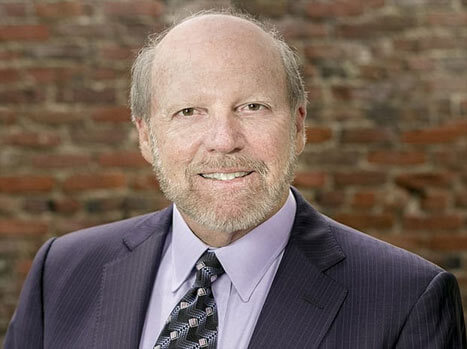




Frequently Asked Questions About Disability Denial Claims
How long do I have to appeal or sue my disability insurer after my claim is denied?
The deadline to appeal a disability denial depends on whether your plan is governed by ERISA or California state law. ERISA-governed group plans typically require the claimant to exhaust internal administrative appeals — usually within 180 days of the denial — before filing suit. Individually purchased disability policies may contain suit limitations clauses as short as one year from the date of denial, which in some cases can be shorter than the general two-year tort statute of limitations under Cal. Code Civ. Proc. § 335.1. Missing either deadline can permanently bar a valid claim. An attorney should evaluate the specific policy and denial letter immediately.
What is the difference between a long-term disability denial under ERISA and one under California state law?
Employer-sponsored group disability plans are typically governed by ERISA, which preempts California state bad faith law and limits recovery to the plan benefits owed plus attorney fees under ERISA § 502(a). Individually purchased disability policies are governed by California law, which allows recovery of punitive damages, consequential damages beyond the policy limits, and attorney fees under Brandt v. Superior Court when the insurer acts in bad faith. The distinction is not always obvious from the policy documents — a Pillsbury & Coleman attorney can determine the governing law and the full scope of available remedies at no charge.
Can I recover punitive damages if my disability insurer denied my claim in bad faith?
Punitive damages are available in California state court bad faith cases involving individually purchased disability policies not governed by ERISA. To recover punitive damages, a policyholder must prove by clear and convincing evidence that the insurer acted with malice, oppression, or fraud. In Dr. Randall Chapman v. UnumProvident Corporation, a San Francisco jury found that UnumProvident denied Dr. Chapman's disability claim to meet internal termination goals — conduct that warranted a $30 million punitive damages award. Pillsbury & Coleman has also secured a federal court summary judgment ruling in Womack v. UnumProvident finding that a reasonable jury could find clear and convincing evidence of malice, fraud, or oppression.
The insurance company says I can do "some type of work" — can they terminate my disability benefits?
Whether the insurer can terminate your benefits depends on the own-occupation definition of disability in your policy. Own-occupation policies protect benefits as long as you cannot perform the material duties of your specific occupation — not whether you can perform any work at all. Insurers frequently attempt to apply the any-occupation definition of disability before the own-occupation period under the policy has expired, or mischaracterize the policyholder's occupational duties to justify termination. This conduct may constitute a wrongful denial of benefits and breach of the implied covenant of good faith and fair dealing.
The insurance company required an independent medical examination and then terminated my benefits — is that lawful?
An independent medical examination is conducted by a physician selected and compensated by the insurance company, which creates a structural financial conflict of interest. Insurers may not terminate disability benefits based solely on a one-time IME opinion that contradicts years of treating physician records without adequate justification. In Sherilee Aragon v. Liberty Mutual, the jury found bad faith where Liberty Mutual obtained biased physician reviews to support a predetermined termination decision. Pillsbury & Coleman regularly identifies these vendor relationships and challenges biased IME opinions in both administrative appeals and litigation.
What happens during the ERISA administrative appeal, and why does it matter so much?
The ERISA administrative appeal is the claimant's only opportunity to build the evidentiary record that a federal court will review if the appeal is denied. Under ERISA's claims procedure regulations, the insurer must provide a full and fair review of the appeal. Evidence not submitted during the appeal — including medical opinions, vocational assessments, and expert reports — is generally excluded from federal court. Pillsbury & Coleman prepares ERISA appeals as if trial preparation, assembling comprehensive medical evidence and documented challenges to the insurer's methodology before the deadline passes.
My Social Security disability claim was approved but my disability insurer still denied my claim — how is that possible?
Social Security Disability Insurance and private long-term disability policies apply different definitions of disability and different evidentiary standards. An SSDI approval does not automatically establish disability under a private policy's own-occupation or any-occupation definition. Insurers routinely deny or terminate private disability benefits despite SSDI approval — and then apply the SSDI award as an offset against any benefits they do pay. Pillsbury & Coleman challenges both the denial and improper offset conduct, and the SSDI record often provides powerful corroborating evidence in litigation.
What documentation should I preserve after my disability claim is denied?
Preserve and organize the following immediately: the denial or termination letter and all written correspondence from the insurer; the insurance policy, certificate of coverage, and summary plan description; all medical records, attending physician statements, IME reports, and functional capacity evaluations submitted with or related to the claim; explanation of benefits statements; any notes or records of oral communications with claims handlers; and all prior claim approvals and benefit payment records. In ERISA cases, this documentation forms the administrative record on which federal court review is based.
How long does it take to resolve a wrongful disability claim denial?
Resolution timelines vary by claim type and litigation posture. ERISA cases typically require exhaustion of administrative appeals before suit can be filed, adding six to twelve months before litigation commences. State court bad faith cases may resolve through settlement or trial in twelve to thirty-six months. Cases involving significant punitive damages exposure — particularly those with documented IME bias or evidence that the insurer denied claims to meet internal termination goals — frequently settle before trial. Pillsbury & Coleman pursues resolution on the timeline that maximizes recovery, not the one that minimizes effort.
Have UnumProvident, MetLife, Prudential, CIGNA, or other major disability insurers been sued before for wrongful claim denials?
Yes. Pillsbury & Coleman has litigated disability denial cases against all major carriers. UnumProvident has been the subject of multi-state regulatory consent orders documenting systemic claims-handling abuses and paid our $31.7 million jury verdict in Chapman. Liberty Mutual paid a bad faith jury verdict in Aragon. Standard Insurance lost a published ERISA abuse-of-discretion ruling in Oster. Sun Life's summary judgment motion was denied in Rader, with the court finding its claims handlers ignored medical evidence and that internal policies encouraged claim denials. MetLife, Prudential, CIGNA/LINA, The Standard, Hartford, and Mass Mutual have each been defendants in Pillsbury & Coleman disability cases.
Have more questions? Contact us for a free consultation with a trusted San Francisco Disability Denial Claims Attorney.
You can get help from an expert attorneys at Pillsbury & Coleman, LLP
We have decades of experience covering disablity denial claims.
Firm Credentials & Track Record
Established in 1991, Pillsbury & Coleman, LLP, is one of the few law firms in California focused exclusively on representing policyholders in insurance disputes and insurance bad faith litigation. Insurance law is all we do and we do it very well.
The firm’s disability-specific litigation record:
- Largest disability insurance bad faith verdict in California history — $31.7 million jury verdict in Dr. Randall Chapman v. UnumProvident Corporation; UnumProvident’s claims department was shown to have denied benefits to meet internal monthly and quarterly termination goals
- Bad faith jury verdict in Sherilee Aragon v. Liberty Mutual — Liberty Mutual terminated benefits after surveillance misuse and biased paper reviews; jury found bad faith
- Federal summary judgment victory in Womack v. UnumProvident — court found a reasonable jury could conclude UnumProvident acted with malice, fraud, or oppression; case settled on favorable terms
- Successful representation of physicians, dentists, attorneys, executives, tech workers, and other licensed professionals across California and nationally
- Carrier-specific knowledge of IME vendor relationships, FCE methodology abuses, own-occupation definition disputes, and internal claims-handling practices at every major disability insurer
- Over $1 billion recovered for policyholders nationally — the majority in disability insurance cases
- Martindale-Hubbell AV Preeminent rated attorneys
- Named to Best Lawyers in America and Super Lawyers
- Fellows, American College of Coverage Counsel (ACCC)
Our attorneys offer experienced legal representation to individuals and businesses in San Francisco and throughout California — as well as to policyholders nationally whose ERISA or individual disability claims are litigated in federal court.
ERISA Disability Claims — Federal Law Governs Employer-Sponsored Plans
The Employee Retirement Income Security Act of 1974 (ERISA) governs long-term disability insurance provided through an employer-sponsored group plan. ERISA preempts state bad faith law, which means policyholders with employer-sponsored disability coverage cannot pursue punitive damages or consequential damages in most circumstances. Recovery is generally limited to the plan benefits owed and attorney fees under ERISA § 502(a).
However, ERISA litigation involves critical procedural leverage points that experienced counsel can exploit. The administrative appeal — filed before any lawsuit is initiated — is the only opportunity to build the evidentiary record. Evidence not submitted during the administrative process is generally excluded from federal court review. Pillsbury & Coleman prepares ERISA appeals with litigation in mind: comprehensive medical evidence, vocational expert opinions, and documented challenges to the insurer’s claims-handling methodology are assembled before the appeal deadline.
The standard of review in ERISA disability litigation depends on the plan language. Where the plan does not grant the insurer discretionary authority to interpret benefits, federal courts apply de novo review — meaning the court examines the denial without deference to the insurer’s decision. Where the plan grants discretion, courts apply the arbitrary and capricious standard, though procedural abuses — such as those found in Oster v. Standard Insurance Company — can still override that deference. Pillsbury & Coleman has litigated both standards in federal district courts and before the Ninth Circuit.
What Constitutes a Wrongful Disability Claim Denial
Disability insurers deny and terminate claims for a wide range of stated reasons. Many of those reasons do not withstand legal scrutiny. The following insurer conduct may give rise to liability for wrongful denial of benefits and breach of the implied covenant of good faith and fair dealing:
- Terminating long-term disability benefits based on a paper review of medical records by a physician who never examined the claimant
- Relying on an independent medical examination conducted by a vendor with a documented financial relationship with the insurer
- Applying the any-occupation definition of disability before the policy’s own-occupation period has expired
- Failing to consider the specific physical and cognitive demands of the claimant’s occupation when evaluating functional capacity
- Using surveillance footage of ordinary daily activities — driving, walking, attending appointments — to mischaracterize a claimant’s functional limitations
- Denying a claim to meet internal monthly or quarterly termination goals rather than on legitimate medical or contractual grounds
- Using a flawed functional capacity evaluation to conclude the claimant can return to work against the weight of treating physician evidence
- Delaying payment of an undisputed claim beyond 40 days without a written explanation under Cal. Ins. Code § 790.03(h)
- Forcing a Social Security Disability Income application then applying the award as an offset without proper accounting
- Failing to provide a full and fair review of an ERISA administrative appeal in violation of ERISA § 503 claims procedure regulations
Case Results — Disability Insurance
$31,700,000 — Jury Verdict | Dr. Randall Chapman v. UnumProvident Corporation
Defendant: UnumProvident Corporation — national group disability insurer
Claimant: Eye surgeon who developed severe anxiety disorder and specific phobia, rendering him unable to safely perform surgery; voluntarily removed himself from the operating schedule and filed for disability benefits
Bad Faith Conduct Proven: UnumProvident failed to have Dr. Chapman examined by an unbiased physician; falsely claimed his condition was treatable and that he was not an eye surgeon; denied his claim to meet internal monthly and quarterly termination goals — conduct the jury found constituted intentional bad faith
Jury Verdict: $1,551,301 in disability benefits for life; $125,000 in emotional distress damages; $30,000,000 in punitive damages
Court: Three-month jury trial; verdict constitutes the largest disability insurance bad faith verdict in California history
Jury Verdict — Bad Faith | Sherilee Aragon v. Liberty Mutual Life Insurance Company
Defendant: Liberty Mutual Life Insurance Company
Claimant: 35-year-old web designer for the University of California who suffered three spinal fractures from a fall and developed debilitating chronic back pain preventing sustained sitting required by her occupation; underwent two failed back surgeries
Bad Faith Conduct Proven: After initially paying benefits, Liberty Mutual terminated the claim when it concluded the disability was permanent; sent investigators to conduct surveillance; misinterpreted medical records; obtained biased physician reviews paid to produce predetermined conclusions
Recovery: Jury found Liberty Mutual acted in bad faith; Pillsbury & Coleman successfully obtained full disability benefits for the client following trial
Source: pillsburycoleman.com/successes/disability-insurance-results/
Federal Summary Judgment Victory | Womack v. UnumProvident, General American Life Insurance Company, and Protective Life Insurance Company
Defendants: UnumProvident; General American Life Insurance Company; Protective Life Insurance Company
Claimant: Dentist who sold his practice after a boating accident caused compression fractures of the thoracic and lumbar spine; condition was complicated by severe osteoporosis, a ruptured tibial tendon requiring reconstructive surgery, permanent nerve damage, and Complex Regional Pain Syndrome
Bad Faith Conduct Proven: Despite the severity and complexity of the claimant’s conditions, UnumProvident terminated payment of disability benefits
Court Ruling: The federal district court granted summary judgment holding that a reasonable jury could find the plaintiff’s evidence to be clear and convincing proof of malice, fraud, or oppression — the standard required for punitive damages under California law
Recovery: Successful settlement achieved following the summary judgment order
Source: pillsburycoleman.com/successes/disability-insurance-results/
Published ERISA Victory | Oster v. Standard Insurance Company — N.D. Cal.
Defendant: Standard Insurance Company
Claimant: Computer programmer who suffered a traumatic brain injury in a serious automobile accident; Standard terminated ERISA disability benefits based on a paper review by an in-house medical consultant who concluded that the claimant’s unsuccessful attempts to return to work demonstrated he was no longer disabled
Source: pillsburycoleman.com/successes/disability-insurance-results/