
Hartford Insurance Claim Denials Attorney
Denial Claims Attorneys Against Hartford Insurance
Hartford denied or terminated your disability or life insurance claim. Your right to seek the full value of that policy survives the denial. Pillsbury & Coleman, LLP represents California policyholders against Hartford in ERISA appeals, bad faith litigation, and federal court.
For more than three decades, our practice has focused exclusively on representing policyholders in disputes with insurance carriers. Clients have recovered over $1 billion through that work, and the firm secured the largest disability insurance bad faith verdict in California history.
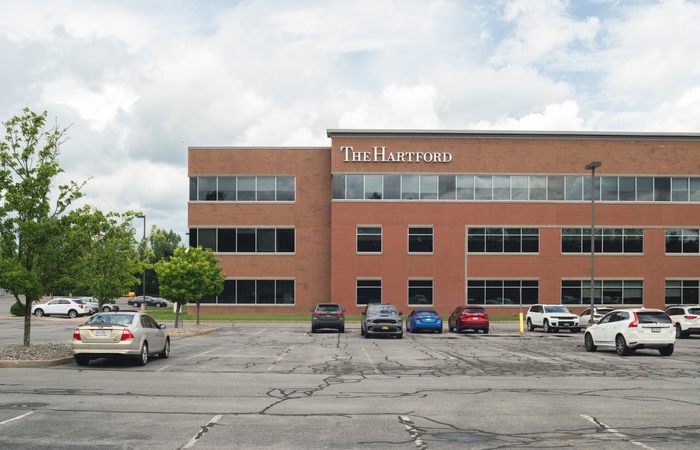
Hartford insurance policies are products of the Hartford Financial Services Group, Inc., a Fortune 150 company with a leading position in insurance and wealth management services.
The Hartford, founded and headquartered in Connecticut, offers a vast range of insurance products to employers and individuals, including group health, life and accident, short-term disability (STD) and long-term disability (LTD) plans, as well as voluntary benefits and individual policies.
Why a Hartford Claim Denial Requires Specialized Counsel
Wrongful claim denials, benefit delays, and other unlawful practices are common reasons for ERISA appeals and litigation, as well as lawsuits in California state courts, against disability and life insurance companies such as The Hartford.
A group LTD plan Hartford administers through an employer is typically governed by ERISA, capping available remedies at recovery of benefits and attorney fees. A federal court reviewing the denial applies de novo review or the more deferential arbitrary and capricious standard, depending on the discretionary authority the plan grants Hartford. An individually purchased Hartford policy instead falls under California bad faith law, including the implied covenant of good faith and fair dealing, and permits broader damages.
A 2009 Good Morning America story delved into the story of a man who had begun collecting disability benefits under a Hartford LTD insurance policy after breaking his neck, but whose benefits were later terminated based on surveillance videos showing him engaged in normal activities. Although the company reversed its decision and paid benefits under media scrutiny and the pressure of potential litigation, many other such cases have surfaced over the years.
Hartford has a well-documented track record of aggressively reviewing claims, even those of insureds who have permanent conditions and have been on disability for years. In addition to attacking the misuse of video surveillance, we pursue claims based on other common abuses such as wrongful claim denials based on the biased opinions of in-house doctors or so-called independent medical examiners (IMEs).
Firm Authority & Track Record
Since founding the firm in 1991, we have built a practice devoted entirely to representing policyholders against insurance carriers, never the other way around. That focus has produced over $1 billion in recoveries and the largest disability insurance bad faith verdict in California history, a $31.7 million jury verdict against UnumProvident in Chapman v. UnumProvident.
- Partner Terrence J. Coleman: recognized ERISA expert, Northern District of California.
- Firm-wide AV Preeminent rating, Martindale-Hubbell.
- Members, American College of Coverage Counsel (ACCC).
- Best Lawyers in America and Super Lawyers honorees.
- Decades of negotiation and trial experience resulting in hundreds of millions of dollars in recoveries for clients.
Case Result
Dollar Amount & Result Type: Successful ERISA Appeal for Senior Vice President
Defendant: Hartford
Bad Faith / Wrongful Denial Conduct Proven: Our client was a former Senior Vice President for a national insurance broker who could no longer work following unsuccessful lumbar spine surgery. Hartford paid benefits only for what it claimed was the reasonable recovery period after the surgery and terminated benefits, saying our client should be able to return to work. Hartford conducted no medical examination of our client and relied exclusively on paper medical reviews to disagree with our client’s treating specialists.
Recovery: In response to our appeal, submitted in January 2026, Hartford paid all past benefits and reinstated the claim on an ongoing basis.
What Constitutes Hartford Bad Faith or Wrongful Denial
- Terminating long-standing benefits based on brief surveillance footage showing routine activity, such as driving or running errands
- Reviewing claims of permanently disabled insureds as aggressively as newly filed claims, without regard to the length of time on claim
- Relying on the opinions of in-house physicians or hired independent medical examiners over years of treating physician records
- Invoking the arbitrary and capricious standard on a plan that does not grant Hartford discretionary authority to interpret its terms
- Shifting to the “any occupation” standard before the policy’s own-occupation period has run
- Delaying payment of a California-governed claim beyond 40 days without a written explanation, in violation of Cal. Ins. Code § 790.03(h)
Wrongful claim denials, benefit delays, and other unlawful practices are common reasons for ERISA appeals and litigation, as well as lawsuits in California state courts, against disability and life insurance companies such as The Hartford.
Frequently Asked Questions
How long do I have to sue Hartford for a wrongful denial in California?
The deadline depends on how your Hartford coverage was issued. An individually purchased policy generally carries a four-year contract limitations period under Cal. Code Civ. Proc. § 337, unless the policy itself sets a shorter suit limitations clause. A group LTD claim governed by ERISA instead follows the deadline in the plan documents or a borrowed analogous state period, so identify which framework applies before assuming a deadline.
What does it mean when Hartford acts in bad faith under California law?
Every California policyholder is owed the implied covenant of good faith and fair dealing, and Hartford is no exception. Cal. Ins. Code § 790.03 defines specific practices that violate that covenant, including unreasonably terminating a claim without investigating current medical evidence. A finding of bad faith allows recovery beyond the policy limits, including attorney fees under Brandt v. Superior Court.
Can I recover punitive damages against Hartford for denying my claim?
Punitive damages require clear and convincing evidence that Hartford acted with malice, oppression, or fraud, a standard our firm has met in bad faith litigation against major carriers. This remedy is limited to individually purchased policies under California law and is unavailable in ERISA-governed group claims. Terminating a claim based on selectively edited surveillance footage can support this standard when the full record shows Hartford ignored contrary medical evidence.
Is my Hartford disability claim governed by ERISA or California law?
Hartford administers both employer-sponsored group plans and individually underwritten policies, and each triggers different rules. Group coverage sponsored by your employer generally falls under ERISA, limiting your remedies to benefits and attorney fees. A policy purchased directly from Hartford instead falls under California bad faith law, which permits significantly broader damages. Our firm reviews your plan and policy documents to identify which framework governs your claim.
Hartford terminated my benefits after surveillance footage — what are my options?
Surveillance alone rarely proves a claimant capable of full-time work; the legal issue is whether Hartford drew reasonable conclusions from what the footage actually shows. Courts have found insurers acted unreasonably when they terminated benefits based on brief clips of routine activity while ignoring years of consistent medical evidence. Our firm has challenged exactly this pattern of Hartford claims handling.
How long does it take to resolve a Hartford claim denial in California?
A Hartford ERISA claim must typically complete the plan’s internal administrative appeal before litigation becomes available, which can take several months on its own. Litigation itself commonly resolves in twelve to twenty-four months, depending on how contested the medical and surveillance record becomes. Cases with strong bad faith exposure often resolve before reaching trial.
How does Pillsbury & Coleman charge for Hartford bad faith cases?
Our firm represents Hartford policyholders on a contingency fee basis, so you owe nothing unless we recover benefits or a settlement on your behalf. This arrangement applies whether your claim proceeds as an ERISA appeal or a California bad faith action. In state law cases, attorney fees may also be recoverable directly from Hartford under Brandt v. Superior Court.
What documentation should I preserve after Hartford denies my claim?
Start with the denial letter itself, since it should state Hartford’s specific grounds for the decision, along with your policy or certificate of coverage. Keep copies of every medical record and appeal submission connected to your claim, and request the surveillance footage or IME report if Hartford relied on either. Courts reviewing your case later will expect this material to be part of the record.
Hartford says I can do “some work” — can it terminate my disability benefits?
Your policy’s own-occupation or any-occupation language controls this question, not Hartford’s general belief that some job somewhere might suit you. Under an own-occupation provision, Hartford must show you cannot perform the substantial duties of the specific job you held, not just any job in the national economy. In publicly documented cases, Hartford has moved to the any-occupation standard before that own-occupation window had actually closed.
Has Hartford been sued before for wrongful denial of disability claims in California?
Hartford’s claims-handling practices, including its reliance on surveillance to terminate long-term claims, drew national media attention in a 2009 Good Morning America investigation. That case was not litigated by our firm, but it reflects a pattern our attorneys evaluate in every Hartford matter we handle. Contact our firm to discuss whether similar conduct affected your claim.
Policyholders in San Francisco, Los Angeles, San Diego, and throughout California can contact Pillsbury & Coleman for a formal case evaluation. Our attorneys assess insurance coverage and bad faith claims at no charge. There is no attorney fee unless we recover compensation on your behalf. To speak with a California insurance bad faith attorney, call (415) 433-8000 or submit a confidential inquiry through our website.